
Your center midfielder just battled and gained control of the ball near midfield by winning a 50/50 ball. She takes a controlling dribbling and passes to your left wing, who made a nice run down the sidelines. Your wing beats the defender and crosses back to the middle. Your center forward works to control the ball in opponent’s box and takes a hard shot. Out of nowhere your opponent’s defender blocks the shot and another defender kicks the ball towards mid field.
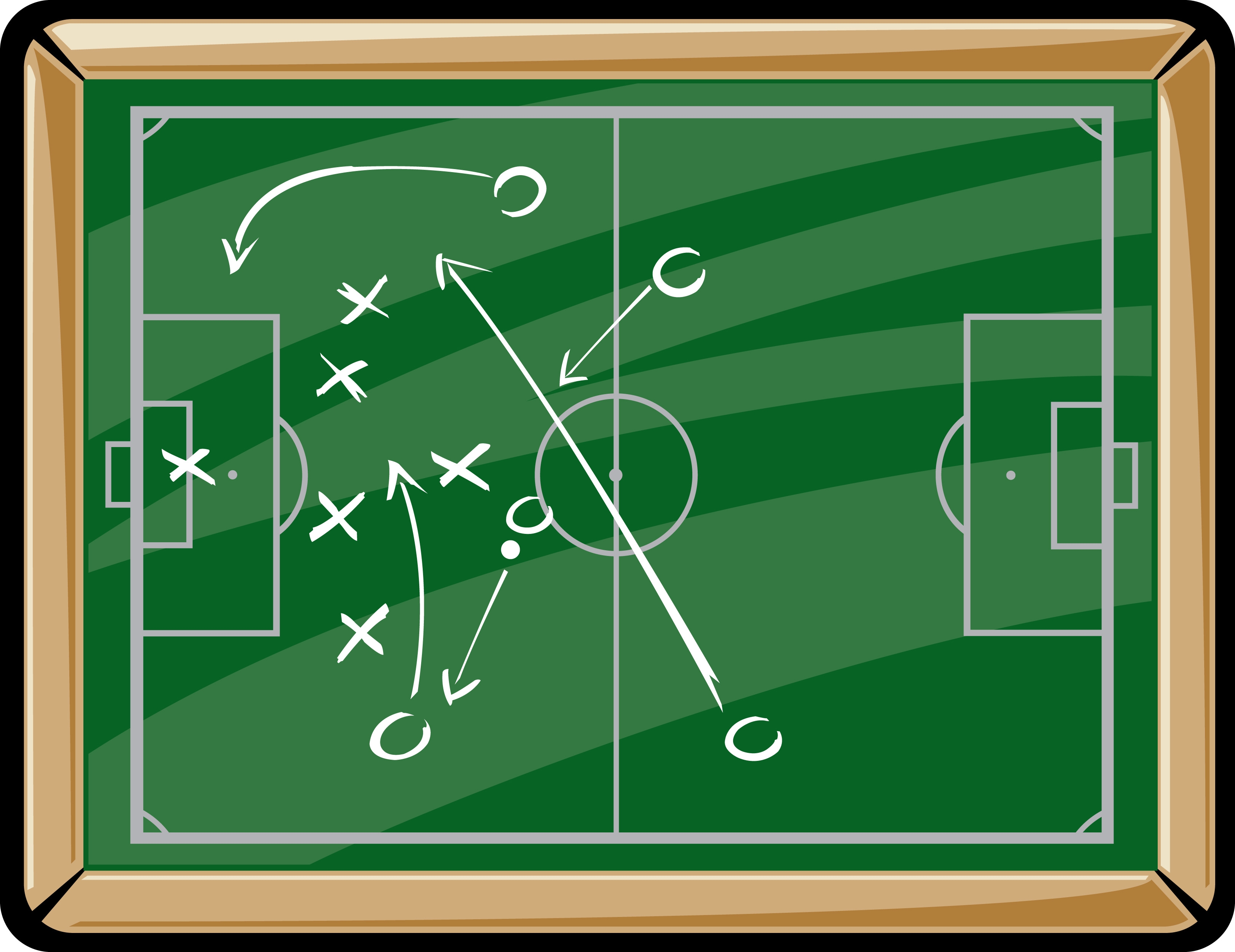 Where are your defenders?
If your team is like most, your defensive players are on the defensive side of mid field, and often as far back as their own 18 yard line. In this situation, you have just negated all the hard work of your midfielders and forwards. If your defense is positioned correctly, they could collect that errant pass from the opponent and put the pressure right back on the other team.
What players, and many coaches, don’t understand is that pushing up and out of the backfield will give their team the ability to maintain possession. This is referred to as “condensing the field.”
When your team is in control of the ball, quickly move the defensive players forward. This will give you more offensive options front, back, and square. Condensing the field is a similar concept to a goalie rushing out of the net to meet an oncoming offensive player, giving the offender less of an area in which to maneuver and shoot.
Many teams will position their defenders just outside of their own 18, even when they’re on the attacking end, to thwart off an attack should an offensive player break through. By keeping defenders back, the field is lengthened for the offensive team and essentially gives them more room to operate. They’ll have more room to play and more gaps to exploit, and thus a better chance to score on your team.
Teach your defense and midfield that they should always be thinking to push forward to support the strikers as they’re attacking. With this mentality, you can have all 8, or 11 (depending on the age group of your team) players attacking as a unit. What coach wouldn’t want to have 11 offensive players attempting to score?
Is condensing the field the same as an offside trap?
When attacking as a large unit, a lot of offside opportunities are created. Most young (and even high-school age) players won’t understand the offside concept and a lot of coaches don’t know how to coach it at an early age. By condensing, you’re moving the defenders forward and thus shortening the field in which you have possession. Catching an opposing team offside is not the purpose of condensing the field, although it’s a great benefit of this kind of a system.
Opposing teams, when faced with a team that’s condensing the field, will find that they have less space in which to work. This will leave them faced with a style of play in which they simply have no other option but to kick the ball long into the offensive zone and try to catch up to it. So if you’re a team trying to condense and move up the field, the spacing will force the other team to be offside and force them to kick long balls into your zone, which are easily captured by the goalie.
Positives vs. Negatives of Condensing the Field
Condensing the field increases the ball possession time and scoring chances for your team. It also reinforces that all players are responsible to get to the ball and pressure the opponents quickly. Another positive advantage is that the opponent will have more offside calls on them, and they’ll become frustrated and lose mental composure as well.
On the negative side, when defensive players push up they must understand they have to pressure the player with the ball because if that player dribbles by them then they are turning around and chasing her back. Midfielders need to transition quickly if the possession is lost. You need aggressive defensive players who will anticipate when a ball will be coming towards them, and they need to attack the ball, control it, and get it back into a scoring position. You also need to teach your keeper to look to come out of the goal and even the box to capture through passes. If the keeper and defenders are tentative, the offensive will control the ball in the space created by pushing up. Another disadvantage to this more aggressive style of play is if your defenders are signficantly slower than the opposition forwards. If you find the opposition is sending through balls into the space behind your defenders who have pushed up, and their attackers are faster than your defenders, you will need to adjust your strategy.
Condensing creates an offensive and defensive team mindset
A good offense arises from a good defense. By condensing the defenders are the first line of offense. Use scrimmages to instill into defenders the understanding of why it’s important to get out of the back quickly and its advantages versus the disadvantages of standing and watching play from their own 18. Teach players that no matter where they’re located on the field they’re all defenders and they’re all offensive players as well. Defenders should be encouraged to make overlapping runs out of the back. The minute a forward loses possession, they need to quickly pressure the ball to disrupt their play. Condensing will allow you to attack, defend, and regain possession once the ball is lost.






I’m an independent volunteer youth soccer coach and honestly,Ican single out any one message I read that didn’t positively influence me,and to a larger extent,my players!condensing the field,well,we at first were wary until we reakized the +ves are more than the -ves….bravo surefire team,you are doing more than you guys can imagine!good luck.
Good program training.I warn u sen mail for me
Thank U
I sincerely appreciate ur perfect intelligent effort in combining this sofisticated undiluted bunch of intellagible knowlege in soccer progressive act.In a few words can i ask for ur help in sending me a combine writeup on how to train a midfielder?PLS DO THIS FOR ME I PLEAD.
thank you for the job well done am growing everyday in terms of coaching
Just to clarify that your “condensing the field” article is not strictly accurate. Defenders being on the edge of their own 18 yard box can indeed give the opposition room to operate (space), however pushing on to say the halfway line leaves “room to operate” (space) behind (ie between defence and goalkeeper).
A defensive line depends on two major considerations.
1) Position in relation to where ball is on field of play
2) Style of play adopted by your team (do you press the ball high up the pitch or drop off and let opponents have ball, or of course a fluid combination of both.
Look at the recent champions league final. Inter Milan 30% possession, Bayern Munich 70%. Inter happy to drop back into own half and challenge Munich to break them down.
Upon interception or regain of possession Inter then counter-attacked and scored two fine goals (the impressive Diego Milito).
In conclusion, your general advice to condense the field could prove problematic for grass-roots coaches, who may be left scratching their heads as to why they keep conceding the same goal on the break.
Just a thought.
Kind regards
I’m an independent volunteer youth soccer coach and honestly,Ican single out any one message I read that didn’t positively influence me,and to a larger extent,my players!condensing the field,well,we at first were wary until we reakized the +ves are more than the -ves….bravo surefire team,you are doing more than you guys can imagine!good luck.
SOCCER FULL INDUCTION
Good advice – I’ve always thought along these lines myself, and always try to instil this mentality in my players. It’s based on the old saying “Attack is the best form of defence”. I did initially have this fault in my new young team this season – there was too much open space between the midfield & the backs, which made it easy for opponents to counter-attack. Our defenders had been previously taught to always stay back (in case…) – but this just makes them “sitting ducks”. It is much easier to defend “offensively”. Getting the backs to follow the play upfield also allows them to be fully involved in the game (rather than staying back and getting bored). If a midfielder needs support, one of the backs should be close enough to receive a pass(back)- then kick ahead to keep the attack going.
It is realy encouraging to see how this changed my team structure at once, my back guys always wanted to leave that open between them & the midfielders, since i introduced the condensing system things started changing to our benefit. Thanks
The article did mention the risks involved with condensing the field. The space behind your defenders is open if the opponent’s forwards have a speed advantage. Even if your defenders are first to the through pass, they will often be facing their own goal, so they must be comfortable using the Goalkeeper as a relief drop pass option. Some teams find it easier to keep the ball in front of them, playing a bit deeper (not just sitting on the 18). Condensing the field could improve sustained possession, but lead to counters and breakaways. Your backs and GK must not ball watch and focus on preventing a fast counterattack.
Hi, I’m a level 1 coach with a team of under 12’s, I’ve found your page really interesting and helpful.
I would really appreciate any drills you could recommend to help my team to learn how to defend well
As that seems to be our problem. We’ve played 4 games and won them all but we are leaking too many goals for
My liking.
Thanks, Ian peakman.
Dis is gr8 and i love it bt can u send me an ebook or article that base on how to predict football.Thnks psalm.
I really appreciate the idea of team condensing the field.But it takes a strong and hard working side to keep to it till the end of a game.Is a good way to break opponent down.
Regards Divine
This is a very detailed explanation on how a team should b playing the game & it is very much appreciated
Oh! What nice trainning program. Since i’ve started to use it my team has improved in scoring too much goals. Specially in three away matches we played these days. By downlaoding it,it became now a big guard line for coaching.
All my thanks.
Wow, this is just wow! I’m gonna start implementing this system on my team & will report back. Thanks Surefire team
This is a wonderful tactical program that exploit the capability of a good team player. Because it require the creativity and solid switchn of roles as the case may be. Cudos to you surefire, you guys α̲̅я̩̥̊ε̲̣̣̣̥ gud
This is amazing program bravo i did use it this wkerd my team got nice win . Thank you bravo keep seeding us more programs
Surefire,since i started enjoying this program my team has completly changed. I’ve noticed that by implimenting them(my players) the spirit of strong CONCENTRATION.
For grass roots players and mini soccer that’s very good advice. I would add a couple of points those being: 1.)That this approach also denies the opposition the opportunity to use the space behind your defensive line to build up speed. This is an important consideration if you don’t want to concede goals. 2.) Another aspect of this approach and football generally is that as well as your defenders pushing on and compressing the space behind them that everybody needs to know they have a role in getting back and defending.
At U8 and U9 the team I work with conceded loads of goals with balls played into this space with a single defender and 3 or 4 attackers running at pace towards them.With pedestrian midfielders watching from the opposition half. Once the space was compressed we pushed one defender further forward for set pieces to pick up the loose ball and the other for long range shots and to play the clearance straight back in.
The keeper also has a part to play as he can also press the new space that the defenders leave and be a sweeper keeper with helps defend against the ball played in behind the high line of defence.
Net result in the case of my team being goals from long range from the defenders, more pressure on the opposition with the game being played in their half more of the time and of course less goals conceded.Time for 9v9 now, so we will have to see how this works with more players and a bigger pitch.
And in response to the previous post about Bayern Munich and Inter Milan, Liverpool did the same thing to dominate Europe in the 80’s. Although I suspect all three are better defenders than most of our players.
Hi This is just the reason why i will always be great full for all your e-books and this one you sent to me just keep it up . Now am now more equipped than years back that i don’t have someone to put me through all that you have been giving me good job
“condensing the field” could prove problematic for grass-roots. Coaches must teach player positioning. The basic of triangle shoould be inculcated so that every time triangles are available with proper distance maintained among team mates. This will condense the field, off side traps are available and basic idea of attacking is taken care. It also depends upon the agility of defenders.Anyway attack is the best defence.
Great Insight. What if you play the 4:2:3:1 system. What would be the position of the two defending midfielders.
Thanks for the advice. I like the idea of combining the GK as a sweeper. It is important then that your GK has good feet as he needs to be solid as a distributor
of the ball to your wing backs. Have you any notes on coaching the double diamond formation for 8v8?
I really appreciated your ability to mould good coaches. Thanks alot, may God bless you now and always
Condensing the field is great, I like to have my defense be very offensive even driving to the goal, just leaving goalie on defense. If the other team goes on a breakaway it is offsides. Why wouldn’t all teams play this way. I really don’t see a disadvantage, please explain if I am right or wrong thinking?
More of a guestion than comment offsides gets called but not enough either the refs miss it or I do not the offsides call as well as I should? Please explain..
I am a goalkeeper and i don’t like the idea of so called ‘condensing the field’ I always like atleast 2 defenders in my half supporting the creative midfielders . i dont like this idea because the opposition team can deep defend and play with a fast single forward and asking remaining 10 players to feed him with long pass like torres scored against Barcelona.